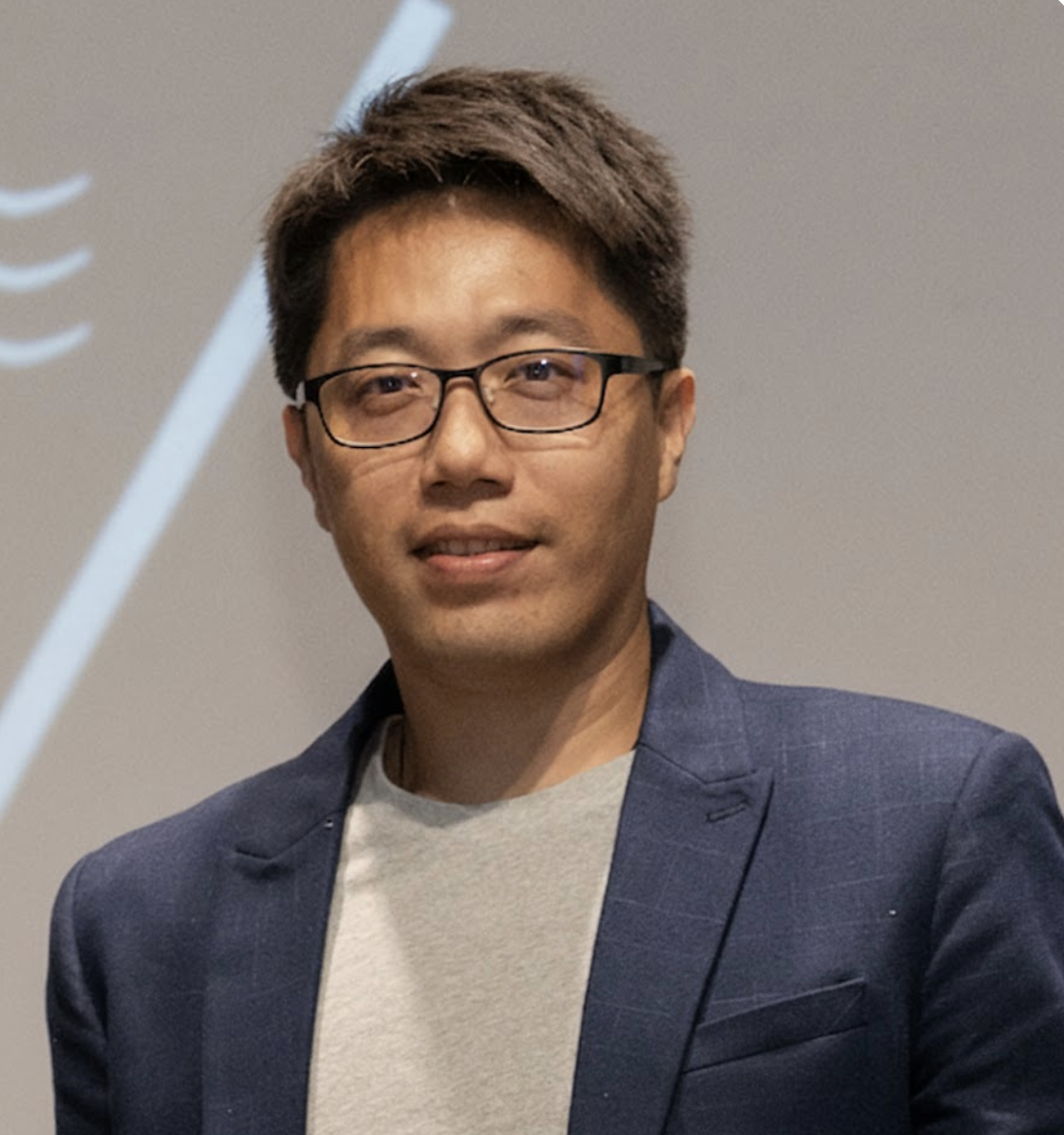
Name: Hsin-Hua Huang
Position: Associate Research Fellow
Affiliation: Institute of Earth Sciences, Academia Sinica
Email: hhhuang@earth.sinica.edu.tw
Website: https://sites.google.com/view/hsinhuahuang/home
Biography
Dr. Hsin-Hua Huang is currently an Associate Research Fellow at the Institute of Earth Sciences, Academia Sinica, and the Executive Secretary of the Taiwan Earthquake Research Center. A leading expert in observational seismology, earth imaging, and geohazards, Dr. Huang specializes in developing advanced 3D/4D seismic tomography and ambient noise interferometry to resolve complex subsurface structures. He holds a Ph.D. from National Taiwan University (2013) and conducted postdoctoral research at Caltech and the University of Utah in the U.S.
Dr. Huang’s pioneering work has yielded significant breakthroughs, including unveiling hidden magma reservoirs beneath the Yellowstone and Tatun volcanoes, deciphering complex fault structures through machine-learning catalogs, and enhancing earthquake early warning systems by incorporating rupture directivity effects. Recently, he has been at the forefront of introducing Distributed Acoustic Sensing (DAS) technology to Taiwan, applying fiber-optic sensing to revolutionize seismic observation and environmental monitoring.
Recognized for his academic excellence, Dr. Huang is a recipient of the NSTC Ta-You Wu Memorial Award (2021) and the Academia Sinica Presidential Scholars Program (2025). He plays a pivotal role in the global geosciences community, serving as an Associate Editor for top-tier journals including Geology and Journal of Geophysical Research, and frequently delivers invited talks at major international conferences such as AGU and AOGS.
Title: From Terabytes to Insights: The Data and Computational Challenges of Distributed Acoustic Sensing
Abstract
Distributed Acoustic Sensing (DAS) is revolutionizing the Earth and environmental sciences by repurposing fiber-optic infrastructure into ultra-dense seismic networks that provide unprecedented spatiotemporal resolution of the Earth's subsurface and environment. This technology is driving transformative scientific breakthroughs, ranging from precision earthquake localization and early warning systems to broad-scale land-to-sea environmental monitoring, and critical borehole applications in geothermal energy and carbon capture and storage (CCS). However, this high-fidelity sensing capability generates massive, continuous data streams that frequently exceed terabytes per day, creating a formidable "Big Data" challenge that outpaces the capacity of traditional processing workflows to extract timely insight. This keynote highlights the tension between these rich scientific opportunities and the logistical hurdles of data management, ultimately serving as an open call for the high-performance computing and artificial intelligence communities to collaborate on scalable architectures and next-generation algorithms that can unlock the full scientific potential of vast DAS datasets.