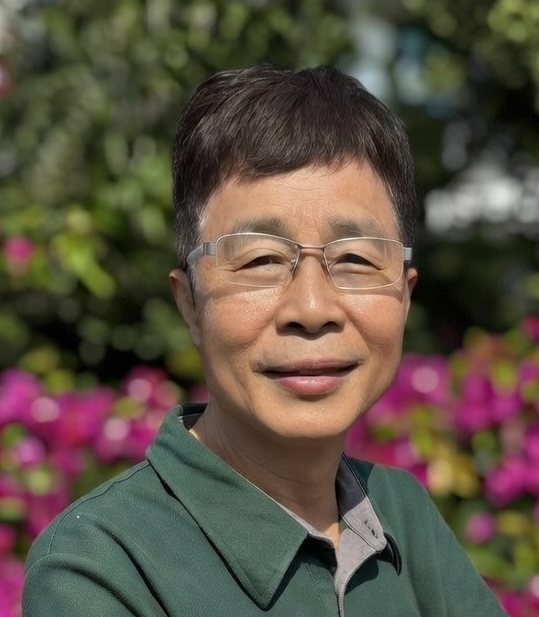
 Dr. Chii-Dong Chen received his Ph.D. in Physics from Chalmers University of Technology in Sweden, where he conducted research on superconductor–insulator phase transitions in two-dimensional arrays of small Josephson junctions. Following his doctorate, he joined the NEC Fundamental Research Laboratories in Tsukuba, Japan, as a postdoctoral researcher, studying Cooper-pair tunneling in superconducting single-electron transistors.
Dr. Chen later became a faculty member at the Institute of Physics, Academia Sinica. His research spans a broad range of topics in superconducting and mesoscopic devices, with a recent emphasis on superconducting qubits. He has led national quantum computing projects in which high-quality superconducting qubits were fabricated and systematically characterized. These efforts culminated in the successful demonstration of fundamental logic gate operations in both single and coupled two-qubit systems.
Dr. Chen currently serves as Chief Executive Officer of the Thematic Center for Quantum Computing at the Research Center for Critical Issues, Academia Sinica.
Most recently, Dr. Chen reported the development of a 5-qubit system and, subsequently, a 20-qubit full-stack quantum computer, representing a major milestone in the advancement of Taiwan’s quantum technology ecosystem.
Title:
Pathways Toward Large-Scale Superconducting Quantum Computing
Abstract:
Quantum computers promise to solve problems currently intractable for classical high-performance systems, fueling a global landscape of intense collaboration and competition. While several physical platforms are under development, achieving practical utility will require scaling to millions of physical qubits. At this magnitude, every modality faces daunting technical hurdles.
Among these, superconducting circuits have emerged as one of the most mature and scalable architectures. In this talk, I will review recent milestones in superconducting quantum computing and discuss why the transition to fault-tolerant, large-scale systems is an absolute necessity. I will then analyze the primary challenges of scaling and explore potential solutions, with a particular focus on the integration of machine learning for advanced device optimization and control.